Fewer Kids, More School: Evidence from the Early 20th Century U.S. Birth Control Movement
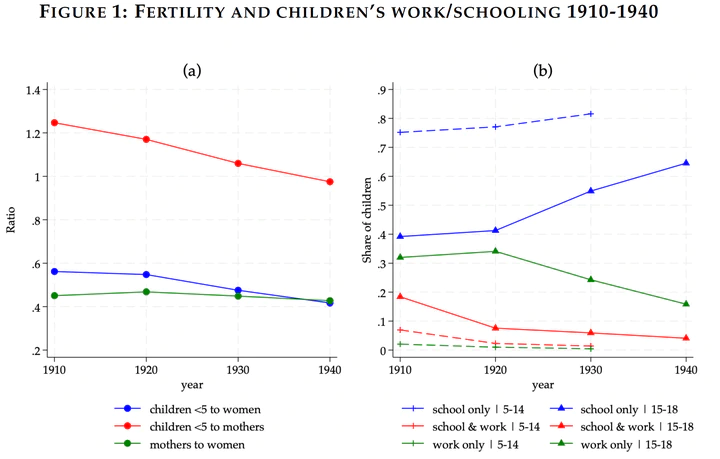
Abstract: What caused the rapid rise in human capital accumulation in the early 20th century? This paper examines the role of the birth control movement, led by Margaret Sanger, which facilitated the roll out of over 600 birth control clinics across the United States. Using a staggered difference-in-differences design, we find that children whose mothers gained access to birth control were less likely to have younger siblings, more likely to attend school and be literate, and less likely to report working. These findings are consistent with a quantity-quality tradeoff, in which investments in education came at the high opportunity cost of forgone income via child labor.